

Travel Malaria
Confronting a constant threat to US travelers
Global distribution and travel risks
Malaria spreads when a parasite infects Anopheles mosquitoes, which then bite and transmit the infection to humans. In 2024, an estimated 282 million malaria cases were reported globally.1,2
Because malaria is not endemic in the US, individuals who travel to malaria-endemic regions lack immunity to the disease, making them susceptible to infection. About 2,000 cases are reported in the US each year, mostly from returned travelers.3
Countries and areas with indigenous cases in 2000 and their status by 20242
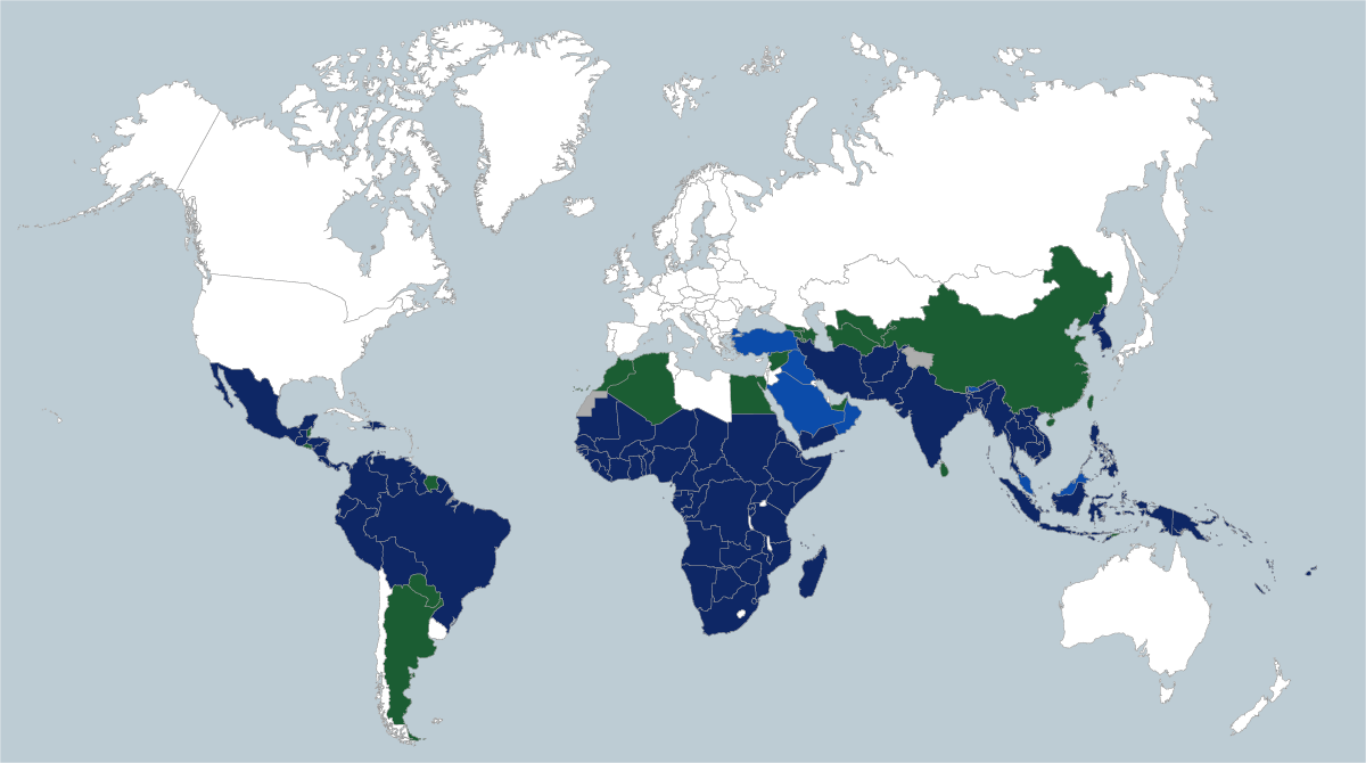
Adapted from the World Health Organization (WHO) 2025.
Certified malaria free after 2000
One or more indigenous cases
Zero indigenous cases
(>3 years in 2024)
No malaria
Not applicable
People who become infected with malaria while visiting malaria-endemic areas may experience mild-to-severe symptoms. If left untreated, malaria can be fatal.3
Mild symptoms can include3:
- Fever and flu-like illness
- Chills
- Headache, muscle aches, and tiredness
- Nausea, vomiting, and diarrhea
Severe symptoms can include3:
- Kidney failure
- Seizures
- Mental confusion
- Coma
Prevention efforts and issues
Recommended travel malaria prevention includes a combination of taking mosquito-avoidance measures and chemoprophylaxis. Standard prophylaxis consists of daily oral tablet use during travel with vaccine options in the periphery.4-6
However, patient adherence to preventive medicine demonstrates need for improvement. In a 2018 CDC report where the US reported 1,788 travel-related malaria cases, only 25% of travelers took prophylaxis. Among those who took prophylaxis, adherence was poor.7
To reduce the number of imported malaria cases in the US, healthcare providers can help their traveling patients understand the health risks associated with malaria and educate on proper prophylaxis adherence.7
Elevating the prophylactic standard of care

Tafenoquine has shifted the prophylaxis landscape by providing broad-spectrum protection against all stages of malaria. The weekly dosing regimen during travel and CDC recommendation for use without global restriction may appeal to US travelers.4,8,9

CDC=Centers for Disease Control and Prevention.
References: 1. Centers for Disease Control and Prevention. How malaria spreads. March 12, 2024. Accessed March 16, 2026. https://www.cdc.gov/malaria/causes/index.html 2. World Health Organization. World malaria report 2025. December 4, 2025. Accessed March 16, 2026. https://www.who.int/teams/global-malaria-programme/reports/world-malaria-report-2025 3. Centers for Disease Control and Prevention. About malaria. March 12, 2024. Accessed March 16, 2026. https://www.cdc.gov/malaria/about/index.html 4. Centers for Disease Control and Prevention. Malaria CDC Yellow Book 2025. April 23, 2025. Accessed March 16, 2026. https://www.cdc.gov/yellow-book/hcp/travel-associated-infections-diseases/malaria.html 5. MALARONE™ [package insert]. GSK: 2019. 6. Vax Before Travel. Will the USA offer malaria vaccines in 2026? March 12, 2026. Accessed March 16, 2026. https://www.vax-before-travel.com/2026/03/12/will-usa-offer-malaria-vaccines-2026 7. Mace KE, Lucchi, NW, Tan KR. Malaria surveillance—United States, 2018. MMWR Morb Mortal Wkly Rep. 2022;71(8):1-29. doi:10.15585/mmwr.ss7108a1 8. Lu KY, Derbyshire ER. Tafenoquine: a step toward malaria elimination. Biochemistry. 2020;59(8):911-920. doi:10.1021/acs.biochem.9b01105 9. Arakoda® [package insert]. 60 Degrees Pharmaceuticals LLC: 2021.