

BABESIOSIS
Drawing awareness to an increasing global health risk
Babesiosis and its prevalence
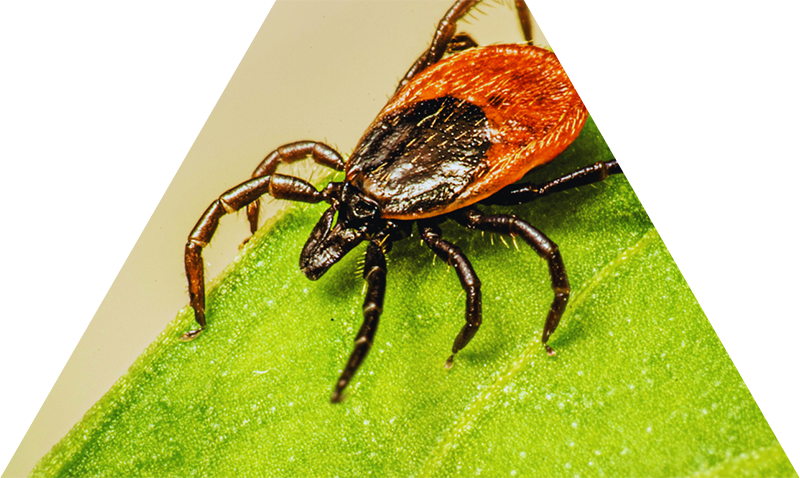
Babesiosis follows infection by the parasite Babesia, commonly transmitted via deer tick bites in the US or, historically, through blood transfusion.1 Deer ticks also transmit Lyme bacteria, so co-infections are common (up to 41% of patients hospitalized for babesiosis also have Lyme disease).1,2
The incidence of babesiosis in the US is not definitively known and difficult to estimate. Between 2011 and 2019, 16,456 US cases of human babesiosis were reported to the CDC; however, voluntary passive surveillance methods are known to underestimate the true burden of vector-borne disease. Furthermore, there are at least 25,000 medical insurance claims associated with babesiosis each year in the US. Because babesiosis symptoms overlap with other illnesses, this also is likely an underestimation of symptomatic disease.3-8
Although there are no definitive reports, the literature is not inconsistent with the possibility of a much higher ceiling. For example, in highly endemic parts of New England, the ratio of the disease burden of babesiosis to Lyme disease was reported in one study to be 33%. If this were also the case nationally, it would imply that the annual burden of acute disease caused by Babesia microti may be as high as 157,000 cases, since the number of insurance claims for Lyme disease is thought to be 476,000.9,10
Babesiosis is endemic in the US, occurring mostly in the Northeast and the upper Midwest. Cases continue to rise regionally and globally, making babesiosis an increasing health risk.11
Clinical manifestations of babesiosis
Babesia infections persist for many months, and potentially more than 2 years in some patients. Up to 80% of infections in adults are symptomatic. Patients with babesiosis typically present with non-specific flu-like symptoms within weeks or months after a tick bite12-15:
- Fever
- Chills
- Sweats
- Headache
- Body aches
- Appetite loss
- Nausea
- Fatigue
Splenomegaly, hepatomegaly, or jaundice may also occur.15
In initial infections, symptoms may persist for several weeks, and fatigue may not resolve for several months.15,16
Risk factors for relapsing or chronic disease include asplenia, age >50, immunosuppressive conditions, malignancies, or taking immunosuppressive drugs (in particular, B-cell depleting medications).12,14

Additionally, individuals with comorbidities are at higher risk for chronic babesiosis or life-threatening ailments, such as low or unstable blood pressure, severe hemolytic anemia, low platelet count, disseminated intravascular coagulation, decreased organ function, or death.17
Healthcare providers treating the chronic symptoms associated with infection with other vector-borne pathogens hypothesize that persistent Babesia infection prolongs recovery times from “long” diseases, such as long COVID and Lyme disease.18
Due to the overlap with other acute and chronic disease symptoms, healthcare providers should consider screening patients for Babesia infection if a patient has unexplained fever in the summer months, or if they have unexplained flu-like symptoms and risk factors for disease persistence, or unexplained persistent fatigue.2,12,19
Current prevention and treatment efforts


Avoiding tick bites remains the only prevention for babesiosis, and there is no FDA-approved treatment. The standard of care treatment regimen, which focuses on symptomatic acute babesiosis, includes atovaquone plus azithromycin or clindamycin plus quinine over a 7- to 10-day course.14,20
In severe, persistent cases occurring mostly in immunocompromised individuals, approximately 50% of patients may face relapse, in part because of antibiotic resistance. Treating persistent cases may require months or years of the standard regimen.12,21
There are currently no approved treatments or formal guidelines for managing chronic symptoms of babesiosis in individuals without classical risk factors, or for managing exacerbation of symptoms of chronic diseases, such as long COVID or post-treatment Lyme disease.1,20
Tafenoquine, an FDA-approved therapy for malaria prophylaxis, has demonstrated activity against Babesia parasites in nonclinical studies, suggesting its potential as a therapeutic option for babesiosis. Thus far, two studies from 60 Degrees Pharmaceuticals have evaluated the effectiveness of tafenoquine for relapsing babesiosis in immunosuppressed patients. Of the collective 7 patients who were treated with tafenoquine in combination with other antimicrobial agents, all achieved curing clearance of B. microti.22-25
Learn about our babesiosis clinical trials
Oral Tafenoquine Plus Standard of Care Versus Placebo Plus Standard of Care for Babesiosis

Expanded Use in Persistent (B. Microti) Babesiosis

Phase 2 Open-Label Study of Tafenoquine for Treatment of Chronic Babesiosis Patients With Severe Fatigue
For more information on our clinical trials, email us at inquiries@60-p.com.
CDC=Centers for Disease Control and Prevention; FDA=US Food and Drug Administration.
References: 1. Bloch EM, Jacobs JW, Vannier E, et al. Guidance on the management of asymptomatic blood donors who test positive for Babesia. Clin Infect Dis. 2026:ciaf721. doi:10.1093/cid/ciaf721 2. Ssentongo P, Venugopal N, Zhang Y, et al. Beyond human babesiosis: prevalence and association of Babesia coinfection with mortality in the United States, 2015-2022: a retrospective cohort study. Open Forum Infect Dis. 2024;11(10):ofae504. doi:10.1093/ofid/ofae504 3. Swanson M, Pickrel A, Williamson J, Montgomery S. Trends in reported babesiosis cases—United States, 2011-2019. MMWR Morb Mortal Wkly Rep. 2023;72(11):273-277. doi:10.15585/mmwr.mm7211a1 4. Kumar A, O’Bryan J, Krause PJ. The global emergence of human babesiosis. Pathogens. 2021;10(11):1447. doi:10.3390/pathogens10111447 5. Schwartz AM, Kugeler KJ, Nelson CA, et al. Use of commercial claims data for evaluating trends in Lyme disease diagnoses, United States, 2010-2018. Emerg Infect Dis. 2021;27(2):499-507. doi:10.3201/eid2702.202728 6. Jones SG, Coulter S, Conner W. Using administrative medical claims data to supplement state disease registry systems for reporting zoonotic infections. J Am Med Inform Assoc. 2013;20(1):193-198. doi:0.1136/amiajnl-2012-000948 7. Babesiosis incidence in US 10x higher than CDC estimates, according to insurance claims study commissioned by 60 Degrees Pharmaceuticals. News release. 60 Degrees Pharmaceuticals. June 3, 2025. Accessed April 8, 2026. https://investors.60degreespharma.com/news-releases/news-release-details/babesiosis-incidence-us-10x-higher-cdc-estimates-according 8. Mattoon S, Baumhart C, Barsallo Cochez AC, et al. Primary care clinical provider knowledge and experiences in the diagnosis and treatment of tick‑borne illness: a qualitative assessment from a Lyme disease endemic community. BMC Infect Dis. 2021;21(1):894. doi:10.1186/s12879-021-06622-6 9. Kugeler KJ, Schwartz AM, Delorey MJ, et al. Estimating the frequency of Lyme disease diagnoses, United States, 2010-2018. Emerg Infect Dis. 2021;27(2):616-619. doi:10.3201/eid2702.202731 10. Krause PJ, McKay K, Gadbaw J, et al. Increasing health burden of human babesiosis in endemic sites. Am J Trop Med Hyg. 2003;68(4):431-436. doi:10.4269/ajtmh.2003.68.431 11. Kumar A, O’Bryan J, Krause PJ. The global emergence of human babesiosis. Pathogens. 2021;10(11):1447. doi:10.3390/pathogens10111447 12. Bloch EM, Kumar S, Krause PJ. Persistence of Babesia microti infection in humans. Pathogens. 2019;8(3):102. doi:10.3390/pathogens8030102 13. Zimmer AJ, Simonsen KA. Babesiosis. In: StatPearls. Treasure Island, FL; 2023. Accessed February 24, 2026. https://www.ncbi.nlm.nih.gov/books/NBK430715/ 14. Centers for Disease Control and Prevention. About babesiosis. February 12, 2024. Accessed February 24, 2026. https://www.cdc.gov/babesiosis/about/index.html 15. Centers for Disease Control and Prevention. Clinical overview of babesiosis. February 13, 2024. Accessed February 24, 2026. https://www.cdc.gov/babesiosis/hcp/clinical-overview/index.html 16. Breitschwerdt EB, Maggi RG, Bush JC, et al. Babesia and Bartonella species DNA in blood and enrichment blood cultures from people with chronic fatigue and concurrent neurological symptoms. Pathogens. 2025;15(1):2. doi:10.3390/pathogens15010002 17. Centers for Disease Control and Prevention. Signs and symptoms of babesiosis. July 9, 2024. Accessed February 24, 2026. https://www.cdc.gov/babesiosis/signs-symptoms/index.html 18. 60 Degrees Pharmaceuticals unveils name of chronic babesiosis clinical trial: B-FREE Chronic Babesiosis Study. News release. 60 Degrees Pharmaceuticals. October 9, 2025. Accessed February 24, 2026. https://investors.60degreespharma.com/news-releases/news-release-details/60-degrees-pharmaceuticals-unveils-name-chronic-babesiosis 19. Meredith S, Oakley M, Kumar S. Technologies for detection of Babesia microti: advances and challenges. Pathogens. 2021;10(12):1563. doi:10.3390/pathogens10121563 20. Centers for Disease Control and Prevention. Clinical care of babesiosis. February 13, 2024. Accessed February 24, 2026. https://www.cdc.gov/babesiosis/hcp/clinical-care/index.html 21. Data on file. 60 Degrees Pharmaceuticals, 2025. 22. Liu M, Ji S, Kondoh D, et al. Tafenoquine is a promising drug candidate for the treatment of babesiosis. Antimicrob Agents Chemother. 2021;65(7):e0020421. doi:10.1128/AAC.00204-21 23. Vydyam P, Pal AC, Renard I, et al. Tafenoquine-atovaquone combination achieves radical cure and confers sterile immunity in experimental models of human babesiosis. J Infect Dis. 2024;229(1):161-172. doi:10.1093/infdis/jiad315 24. Krause PJ, Rogers R, Shah MK, et al. Tafenoquine for relapsing babesiosis: a case series. Clin Infect Dis. 2024;79(1):130-137. doi:10.1093/cid/ciae238 25. 60 Degrees Pharmaceuticals announces all patients cured of babesiosis after tafenoquine treatment in expanded use clinical trial. News release. 60 Degrees Pharmaceuticals. March 11, 2026. Accessed March 31, 2026. https://investors.60degreespharma.com/news-releases/news-release-details/60-degrees-pharmaceuticals-announces-all-patients-cured